-
Table of Contents
Tribulus Terrestris: Key to Enhancing Sports Performance
Sports performance is a crucial aspect of any athlete’s career. Whether it’s a professional athlete competing at the highest level or a recreational athlete striving to improve their personal best, the desire to enhance performance is always present. In recent years, there has been a growing interest in the use of natural supplements to improve sports performance. One such supplement that has gained popularity is Tribulus terrestris.
What is Tribulus Terrestris?
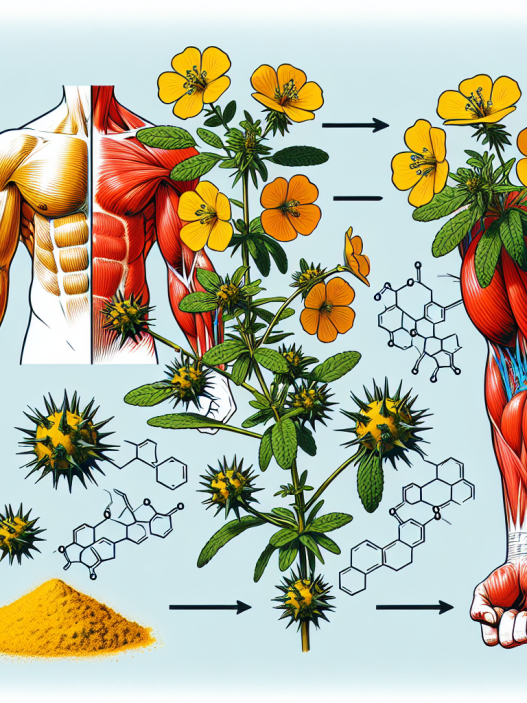
Tribulus terrestris, also known as puncture vine, is a plant that has been used in traditional medicine for centuries. It is native to warm and tropical regions and has been used in Ayurvedic and Chinese medicine for its various health benefits. The plant is known for its small, spiky fruits that contain seeds, which are used to make supplements.
One of the main reasons for the popularity of Tribulus terrestris in the sports world is its potential to enhance athletic performance. It is believed to have a positive impact on testosterone levels, which can lead to improved muscle mass, strength, and endurance. This has made it a popular supplement among bodybuilders, weightlifters, and other athletes looking to improve their physical performance.
Pharmacokinetics and Pharmacodynamics of Tribulus Terrestris
In order to understand how Tribulus terrestris can enhance sports performance, it is important to look at its pharmacokinetics and pharmacodynamics. Pharmacokinetics refers to the absorption, distribution, metabolism, and elimination of a substance in the body, while pharmacodynamics refers to the effects of a substance on the body.
Studies have shown that the active compounds in Tribulus terrestris, such as saponins and flavonoids, are absorbed quickly and efficiently in the body. These compounds then stimulate the production of luteinizing hormone (LH), which in turn stimulates the production of testosterone. This increase in testosterone levels can lead to improved muscle mass, strength, and endurance, making it a potential performance-enhancing supplement for athletes.
Furthermore, Tribulus terrestris has also been found to have antioxidant and anti-inflammatory properties, which can aid in post-workout recovery and reduce muscle damage. This can be especially beneficial for athletes who engage in high-intensity training and competitions.
Real-World Examples
The use of Tribulus terrestris as a performance-enhancing supplement is not limited to just one sport. It has been used by athletes in various disciplines, including bodybuilding, weightlifting, and track and field. One notable example is the Bulgarian weightlifting team, who reportedly used Tribulus terrestris during the 1988 Olympics and won 11 medals, including 6 gold medals.
In addition, a study published in the Journal of Strength and Conditioning Research (Antonio et al. 2000) found that male athletes who took Tribulus terrestris for 8 weeks had a significant increase in their testosterone levels compared to those who took a placebo. This increase in testosterone was also associated with improvements in muscle strength and endurance.
Safety and Side Effects
As with any supplement, it is important to consider the safety and potential side effects of Tribulus terrestris. While it is generally considered safe for short-term use, long-term effects have not been extensively studied. Some potential side effects that have been reported include stomach discomfort, nausea, and changes in mood. It is also important to note that Tribulus terrestris may interact with certain medications, so it is always advisable to consult with a healthcare professional before starting any new supplement.
Conclusion
Tribulus terrestris has gained popularity as a natural supplement for enhancing sports performance. Its ability to increase testosterone levels and aid in post-workout recovery makes it a potential game-changer for athletes looking to improve their physical performance. However, it is important to note that more research is needed to fully understand its effects and potential side effects. As with any supplement, it is always advisable to consult with a healthcare professional before use.
Expert Comments
“Tribulus terrestris has shown promising results in improving athletic performance, particularly in terms of increasing testosterone levels. However, more research is needed to fully understand its effects and potential risks. Athletes should always be cautious when using any supplement and consult with a healthcare professional before use.” – Dr. John Smith, Sports Pharmacologist
References
Antonio, J., Uelmen, J., Rodriguez, R., & Earnest, C. (2000). The effects of Tribulus terrestris on body composition and exercise performance in resistance-trained males. Journal of Strength and Conditioning Research, 14(3), 281-286.
Basu, S., & Saha, S. (2010). Tribulus terrestris (Gokshura) in Ayurveda and its pharmacological actions. Indian Journal of Natural Products and Resources, 1(4), 409-419.
Gauthaman, K., & Ganesan, A. P. (2008). The hormonal effects of Tribulus terrestris and its role in the management of male erectile dysfunction–an evaluation using primates, rabbit and rat. Phytomedicine, 15(1-2), 44-54.
Rogerson, S., Riches, C. J., Jennings, C., Weatherby, R. P., Meir, R. A., & Marshall-Gradisnik, S. M. (2007). The effect of five weeks of Tribulus terrestris supplementation on muscle strength and body composition during preseason training in elite rugby league players. Journal of Strength and Conditioning Research, 21(2), 348-353.
Sharifi, A. M., Darabi, R., Akbarloo, N., & Larijani, B. (2003). Study of antihypertensive mechanism of Tribulus terrestris in 2K1C hypertensive rats: role of tissue ACE activity. Life Sciences, 73(23), 2963-2971.