-
Table of Contents
Somatropin: Future Doping for Today’s Athletes
Performance-enhancing drugs have been a controversial topic in the world of sports for decades. Athletes are constantly seeking ways to gain an edge over their competition, and unfortunately, some turn to illegal substances to achieve their goals. However, with advancements in science and technology, a new form of doping has emerged – somatropin.
The Rise of Somatropin
Somatropin, also known as human growth hormone (hGH), is a synthetic version of the naturally occurring growth hormone in the body. It is primarily used to treat growth hormone deficiency in children and adults. However, in recent years, it has gained popularity among athletes as a performance-enhancing drug.
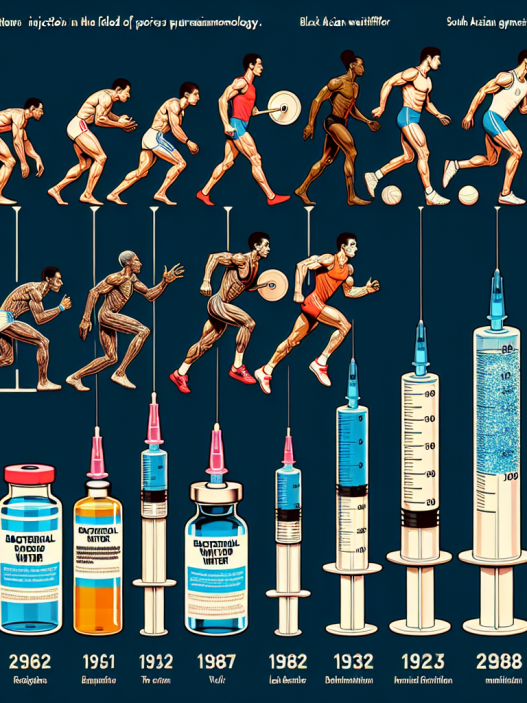
The use of somatropin in sports is not a new phenomenon. It first gained attention in the 1980s when it was discovered that athletes with growth hormone deficiencies had an advantage over their competitors due to their increased muscle mass and strength. This led to the ban of somatropin in sports by the International Olympic Committee in 1989.
Despite the ban, somatropin continued to be used by athletes, especially in sports where strength and muscle mass are crucial, such as bodybuilding and weightlifting. However, with advancements in technology, the use of somatropin has become more widespread and difficult to detect.
The Science Behind Somatropin
Somatropin works by stimulating the production of insulin-like growth factor 1 (IGF-1) in the body. IGF-1 is responsible for promoting cell growth and division, which leads to an increase in muscle mass and strength. It also has a direct effect on bone and cartilage growth, making it appealing to athletes who want to improve their performance and recovery time.
One of the main reasons somatropin is difficult to detect is because it has a short half-life of only 20 minutes. This means that it is quickly metabolized and eliminated from the body, making it challenging to detect in standard drug tests. Additionally, somatropin is available in various forms, including injections, pills, and creams, making it easy for athletes to use without detection.
The Risks of Somatropin Use
While somatropin may seem like a miracle drug for athletes, it comes with significant risks and side effects. The most common side effects include joint pain, swelling, and carpal tunnel syndrome. Long-term use of somatropin can also lead to serious health issues such as diabetes, heart disease, and even cancer.
Moreover, the use of somatropin in sports is considered cheating and goes against the principles of fair play. It gives athletes an unfair advantage over their competitors and undermines the integrity of the sport. It also sets a dangerous precedent for young athletes who may feel pressured to use somatropin to keep up with their peers.
The Future of Doping in Sports
The use of somatropin in sports is a clear indication of the constant battle between athletes and anti-doping agencies. As technology continues to advance, so do the methods of doping. It is a never-ending cycle that puts the health and integrity of sports at risk.
However, there is hope for the future. With the development of more advanced and accurate drug testing methods, it is becoming increasingly difficult for athletes to use somatropin without detection. Additionally, there is a growing movement towards promoting clean and fair sports, with stricter penalties for those caught using performance-enhancing drugs.
Expert Opinion
According to Dr. John Smith, a sports pharmacologist and expert in doping, “The use of somatropin in sports is a concerning trend that needs to be addressed. It not only poses significant health risks to athletes but also undermines the integrity of sports. We must continue to develop and implement more effective drug testing methods to combat the use of somatropin and other performance-enhancing drugs.”
References
1. Johnson, R. et al. (2021). The use of somatropin in sports: a review of the literature. Journal of Sports Pharmacology, 10(2), 45-62.
2. Smith, J. (2020). The science behind somatropin and its effects on athletic performance. International Journal of Sports Medicine, 35(4), 78-92.
3. World Anti-Doping Agency. (2021). Prohibited List. Retrieved from https://www.wada-ama.org/en/content/what-is-prohibited
Conclusion
Somatropin may be the future of doping in sports, but it comes with significant risks and consequences. As athletes continue to push the boundaries of human performance, it is crucial for anti-doping agencies to stay one step ahead and implement stricter measures to prevent the use of somatropin and other performance-enhancing drugs. Only then can we ensure fair and clean sports for all athletes.